Syracuse, New York, has been marked by deep resilience and persistent challenges. For decades, the city has held one of the highest child poverty rates in the nation. This year’s Lasallian Social Justice Institute (LSJI) sought to explore the realities surrounding child poverty and the work of hope.
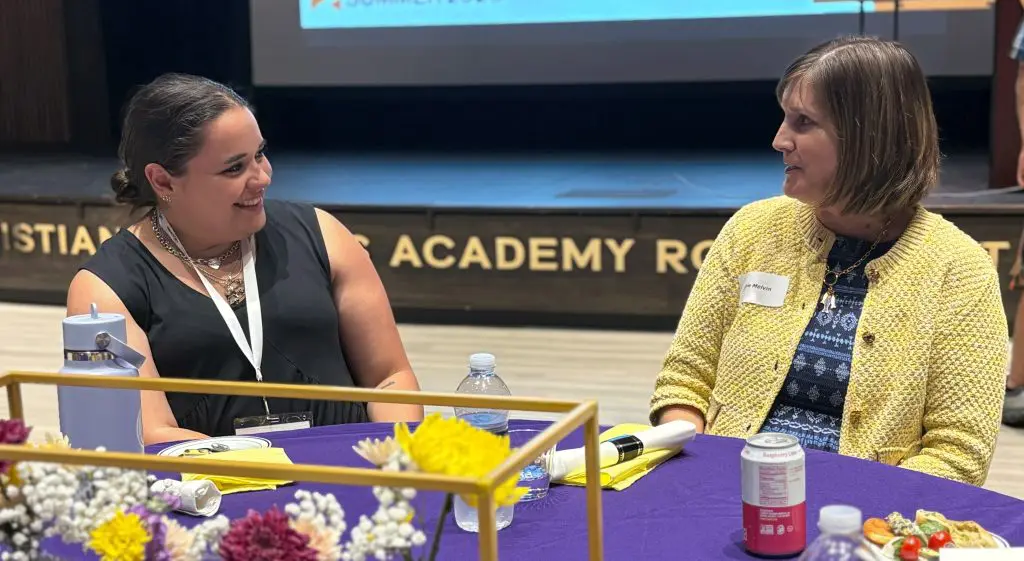


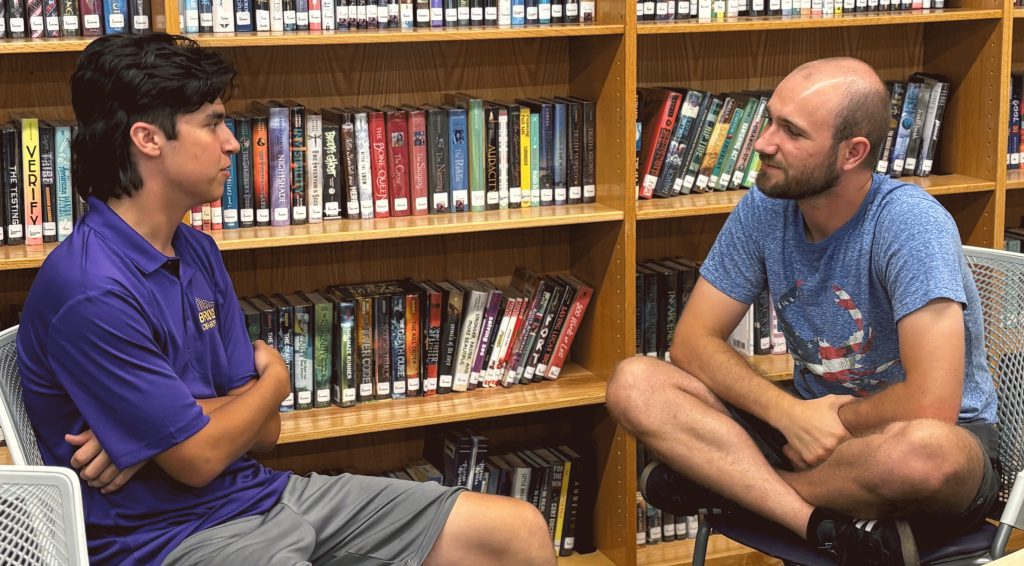

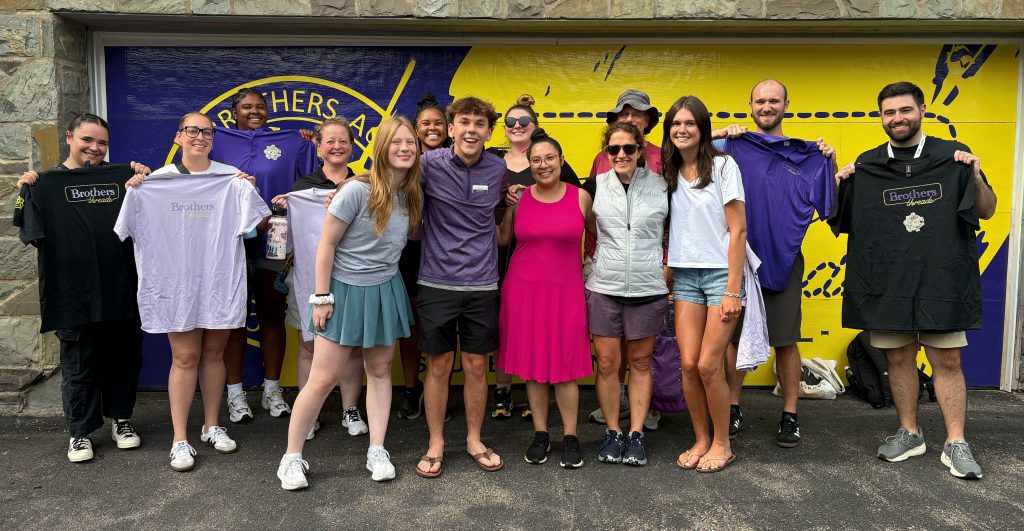
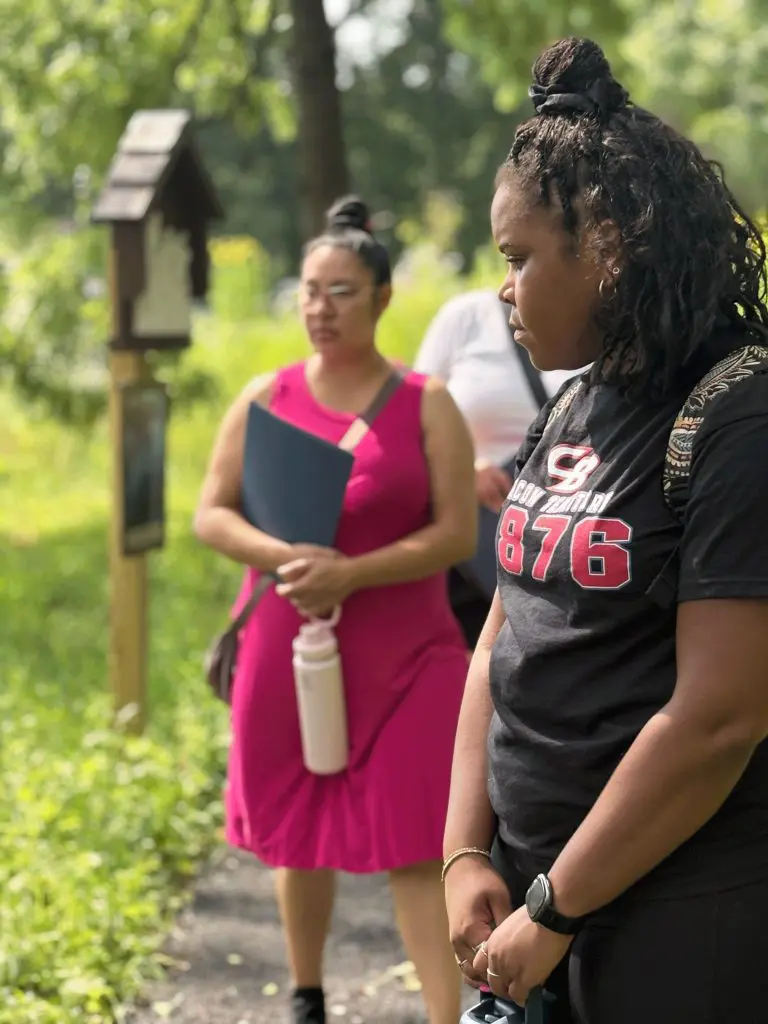
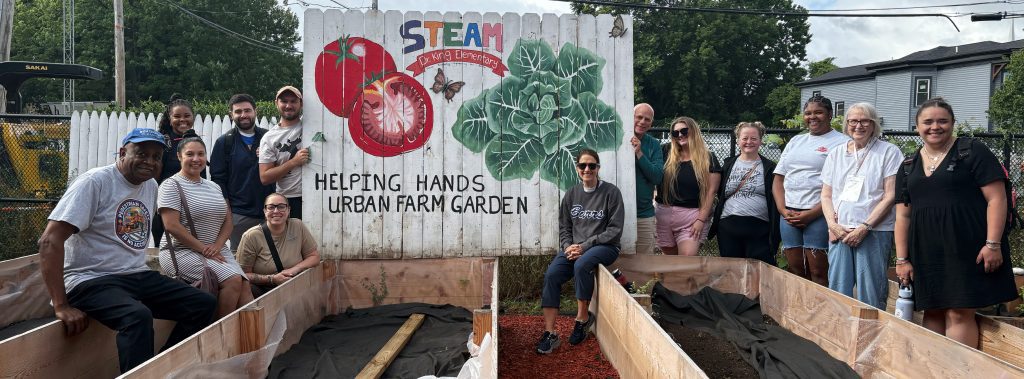


From July 20-24, 12 participants encountered the lived realities of children and families experiencing poverty and examined the interconnected systems of education, housing, food insecurity, and access to community resources. Through site visits, dialogue with community partners and guided reflections, participants were invited to move beyond statistics to a deeper understanding of those whose lives are impacted by poverty.
The group consisted of Lasallians from across the Region, representing secondary schools, youth and family services, Catholic Charities as well as a research institute and public charter school. The on-site program was facilitated by Brother Michael Phipps, FSC, interim director of mission and formation at Cretin-Derham Hall in St. Paul, Minnesota, and Amanda Webster, religion teacher at Christian Brothers Academy (CBA), which served as a home base for the program this year.
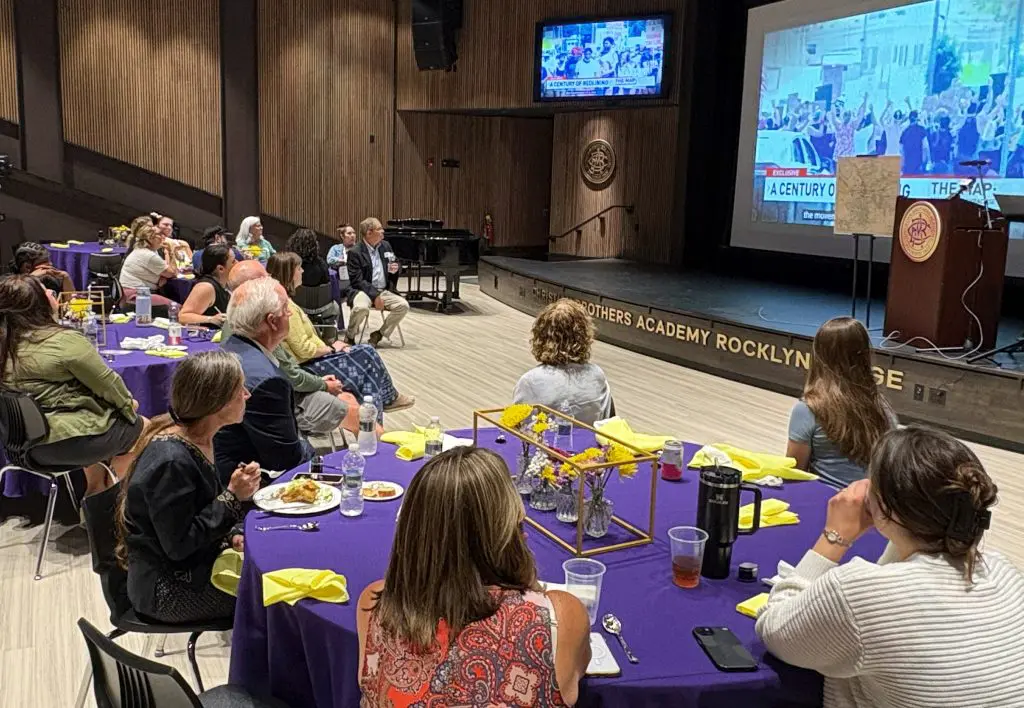
Participants gathered at CBA on Monday for a presentation from local news anchor Matt Mulcahy on redlining, its history and current implications. Participants also reviewed an old redlining map from Syracuse in 1919 to see the precedent of this targeted practice.
In his welcome address, CBA president Matt Keough said, “There are some alarming statistics about Syracuse. But, also there are stories of hope. Amazing people making a difference in the Central New York Community. … You will find both of those during this week.”
Tuesday, participants witnessed the Lasallian mission embodied in CBA’s Bridge 2 Brothers program that offers rising fifth- and sixth- grade students in the Syracuse City School District daily curriculum and experiential learning for four weeks over the summer. This program first began as a Johnston Institute capstone project and later went on to receive the Brother Michael Collins Award in 2024.
Visiting this program particularly struck Rachel Jones, a seventh-grade English and language arts teacher from Catalyst Maria Charter School in Chicago, Illinois.
“I watched high school scholars eagerly mentor fifth- and sixth-grade students, learning that true leadership requires patience, compassion and the courage to set loving but firm expectations,” she said.
“I saw how education extends beyond the classroom by creating a community of trust with families. … Education has the power to uplift not only individual scholars but entire families by fostering dignity, belonging and hope,” Jones added.
Similarly, Sergio Rumayor, religion teacher at St. Peter’s Boys High School in Staten Island, New York, and Lasallian alumnus, attested to the mission of Lasallian education that “sees each student as an equal individual worthy and deserving of dignity, respect and care.”
“This environment, over time, can nurture incredible fruits and allows children to put their God-given gifts to good use,” he continued.
The program went on to focus on hunger and hope alongside several local partner organization visits, including the Samaritan Center, Brady Faith Center, Brady Farm community garden and Grace Church. Later, they volunteered with partners focused on housing equity, including A Tiny Home for Good and Sleep in Heavenly Peace, where they constructed bunk beds for children in the community.
Volunteering at the Road to Emmaus Ministry, a faith-based outreach ministry, Kristy Reed, case manager supervisor for youth services for Catholic Charities of Philadelphia, Pennsylvania, had an experience that stuck with her.
“Almost every individual that we served took the time to notice our names from our nametags and to thank us personally, mentioning our names,” she recalled. “They were able to show us, complete strangers, dignity and respect in their time of need.”
She connected this to her ministry saying, “while speaking to my co-workers, other professionals, and especially to those that we provide services to … it important is to make them feel seen, heard, respected, etc. even through something as small as calling them by name or asking how they are doing and really listening.”
“Each ministry demonstrated that service is rooted in building relationships and recognizing the presence of God in every person,” said Alicia Sims, accounting associate at Christian Brothers High School in Sacramento, California. She emphasized the power of bearing witness and treating people with dignity, compassion and respect.
This experience both “challenged me to look beyond circumstances and see each individual with greater empathy and understanding” and “reinforced that living out our faith means not only responding to immediate needs but also creating welcoming communities where people feel valued, heard and supported,” Sims observed.
The final day of the program focused on community aid, serving with Interfaith Community Collective’s Syracuse Assistance for Food & Essentials (S.A.F.E.) to welcome the community and share access to resources including food distribution, clothing, hot meals, grocery assistance and more.
For Jones, LSJI left her with a “renewed sense of responsibility,” deeper understanding of “what it means to live out the Lasallian mission” and a challenge to reflect “not only on how I serve my scholars in the classroom, but also on how I contribute to the mission of my entire school community.”
“The Lasallian mission is not something we simply talk about,” she said. “It is something we intentionally live each day.”
Reed left the experience feeling refreshed and affirmed that this formation experience “reminded me of why I do what I do.”
Similarly, this experience has “absolutely altered my sense of mission, especially within my own community,” reflected Rumayor. “It has energized me to see more, question more and do more.”
Following a week filled with deeper awareness, community and responsibility, Rumayor simply stated, “My body is tired, but my soul is fed.”