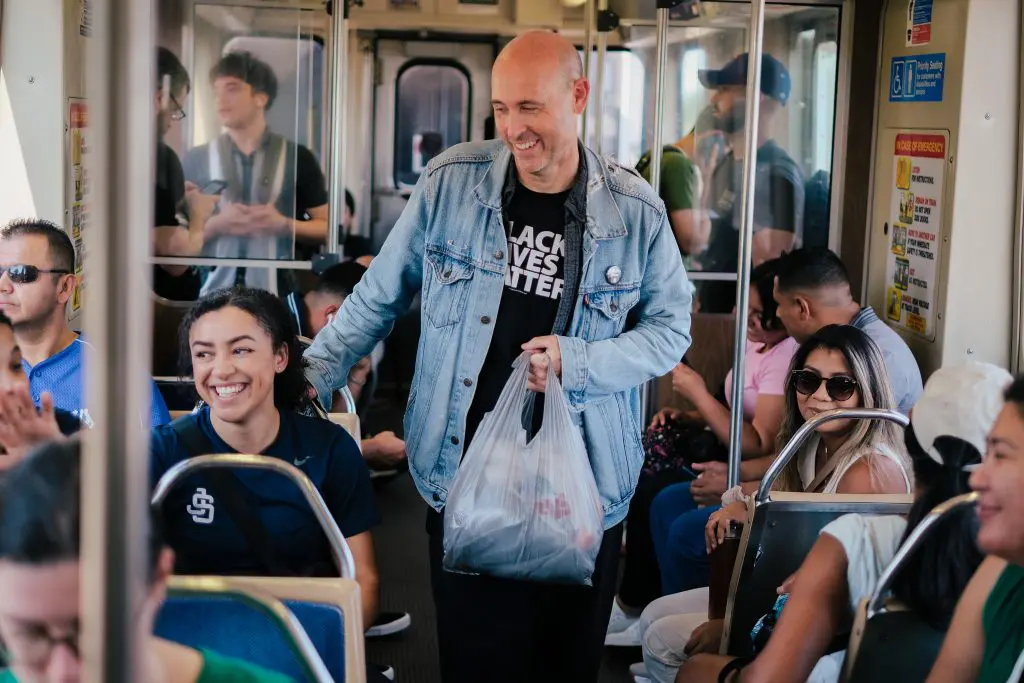
Fourteen participants explored injustices impacting Chicago communities during this summer’s Lasallian Social Justice Institute (LSJI) from July 15-20. Throughout the week, participants focused on food insecurity, homelessness, criminal injustice and immigration enforcement under the facilitation of the Brother David Darst Center and its community partners.

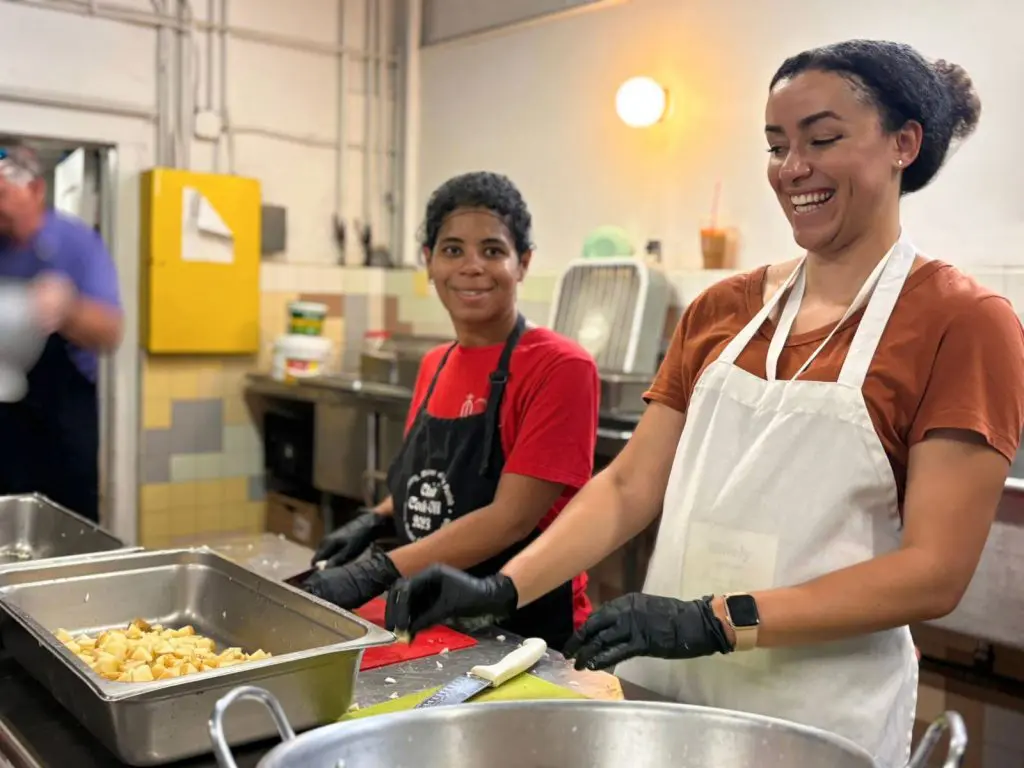
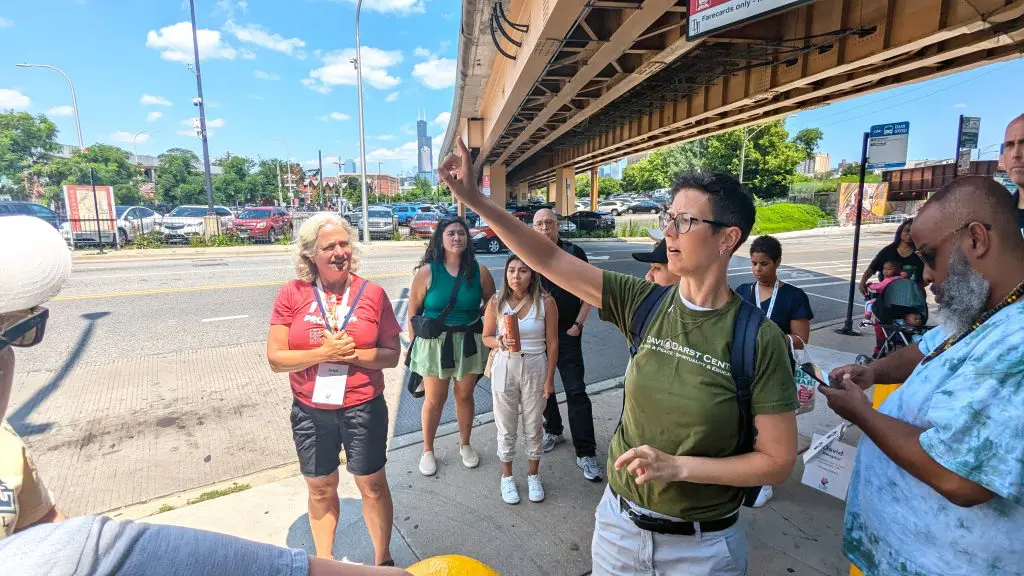
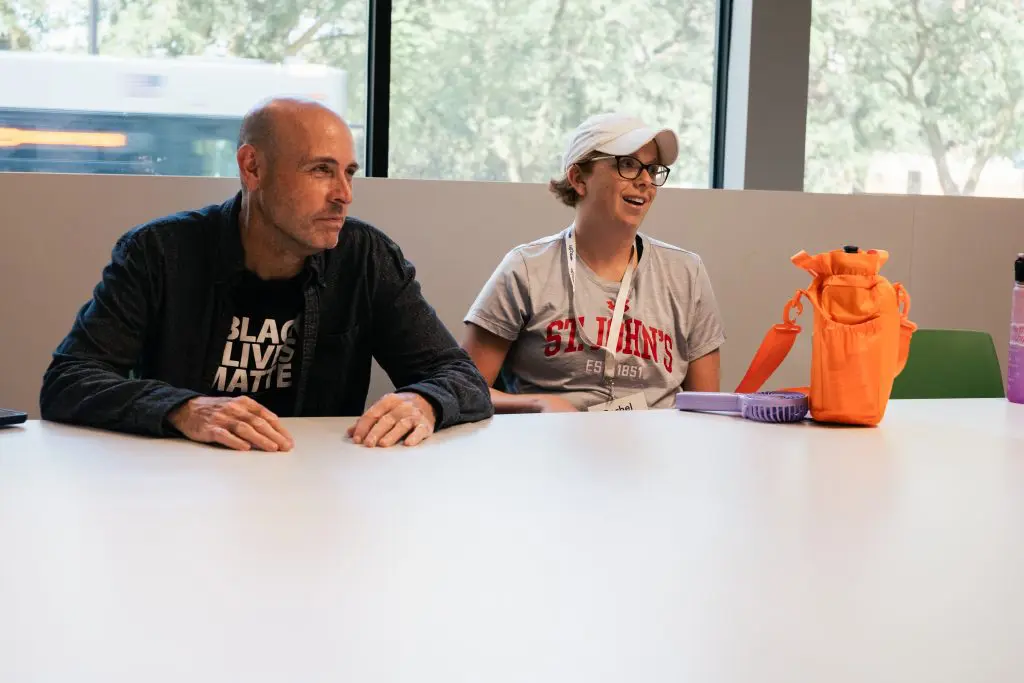
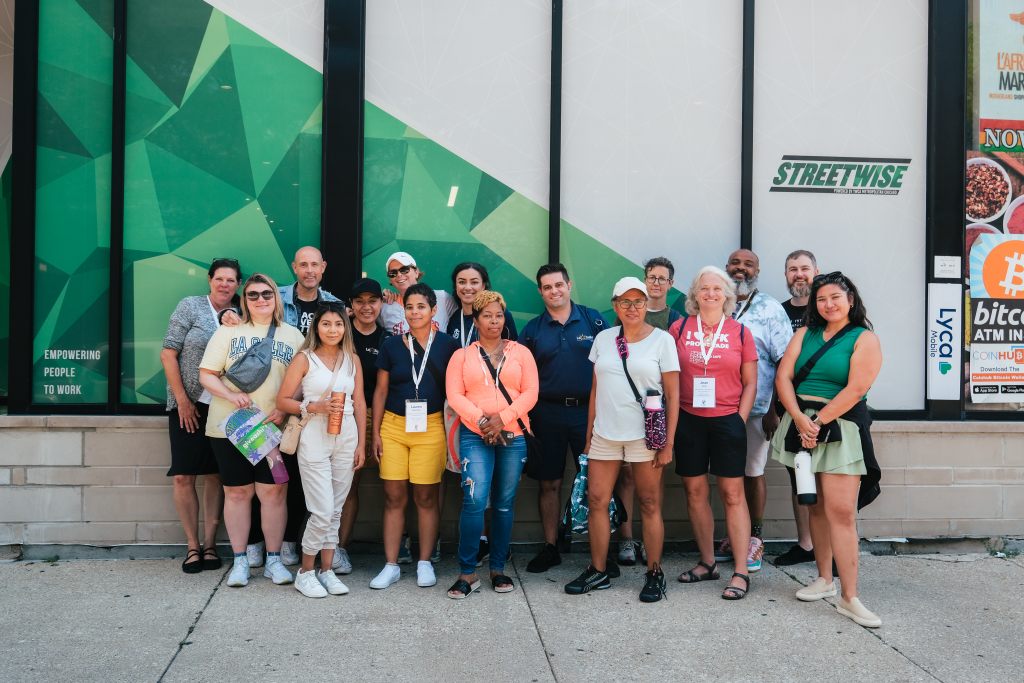

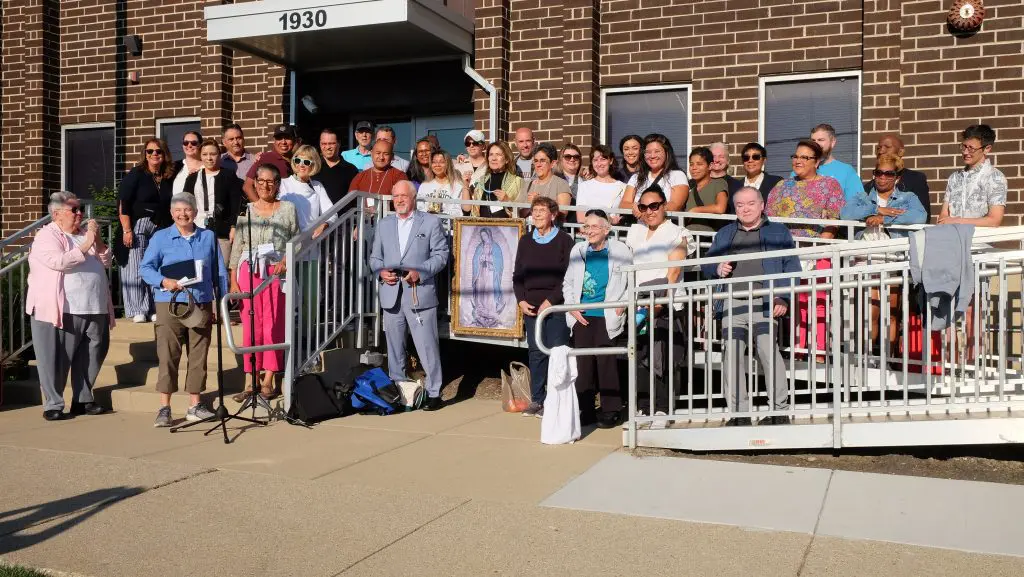
Focusing on food insecurity, the group spent Tuesday morning volunteering at St. James Food Pantry in the city’s South Side. There they registered clients, while also helping to distribute, collect and load food. Later, participants traveled north to St. Thomas of Canterbury Soup Kitchen, where they prepared, served and shared a simple meal with clients.
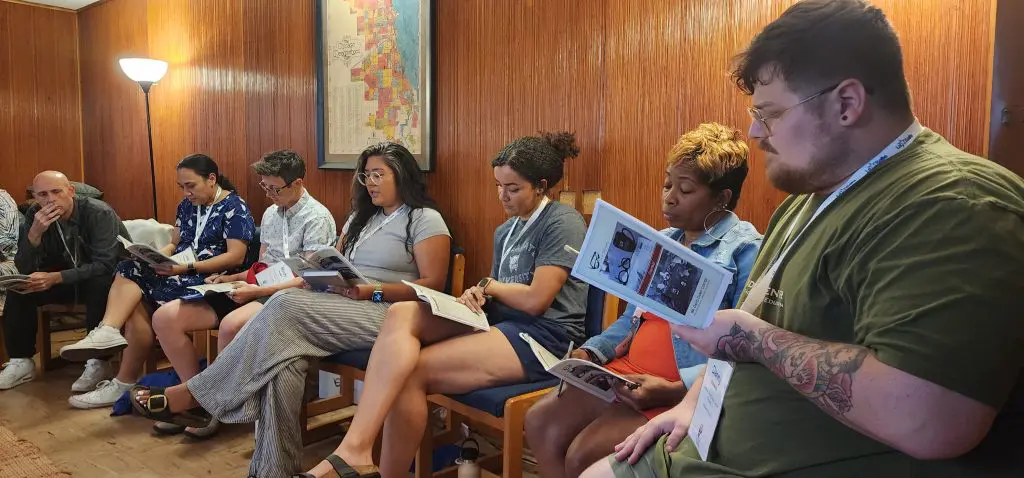
Each day concluded with time for group reflection back at the Darst Center. Participants all committed themselves to creating an intentional community space where they could discuss and share perspectives safely and authentically.
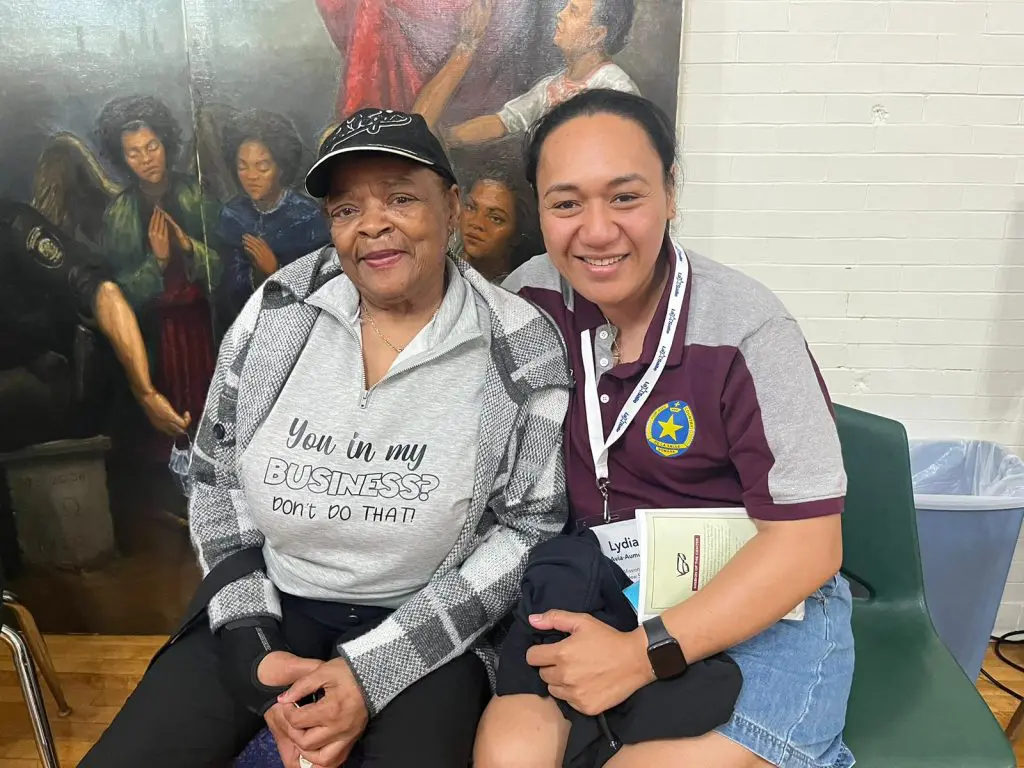
Participant Lydia Avia-Amuna, associate director of formation for Lasallian Mission Services, a Young Lasallians ministry for the District of Australia, New Zealand, Pakistan and Papua New Guinea, shared her gratitude for this intentional community. She expressed how she loved “learning from others how to approach talking about social justice issues in a realistic way that motivates us to action.”
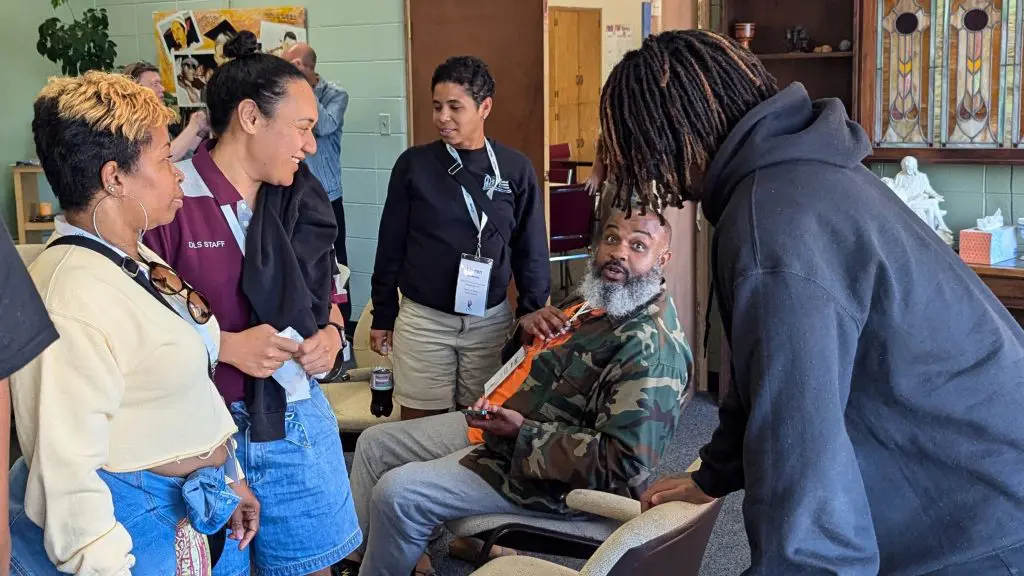
Wednesday focused on homelessness, starting the day at StreetWise, a nonprofit organization that employs those experiencing homelessness to sell local newspapers and earn income with dignity. They spent time with individuals to hear their personal stories of coming to, being helped by and continuing to work with StreetWise. Next, at Cornerstone Men’s Shelter, one of the only remaining homeless shelter in the North Side of Chicago, the group heard from the shelter director on his own experience of homelessness and why this work is so personally important to him. The day concluded in two neighborhoods known for high concentrations of youth homelessness. There the group was invited to think more deeply about what factors could contribute to this reality.
In reflecting on her LSJI experience, participant Jean Jones emphasized both the “harsh reality that is the everyday life of so many individuals but also the enormity, complexity and challenge of addressing these issues.” A math teacher at Sacred Heart Cathedral Preparatory in San Francisco, California, Jones continued, “More importantly, I learned not to be afraid to tackle what might seem to be an insurmountable problem, but to realize that by acknowledging the humanity and dignity of even one individual who suffers from injustice, we are doing the work of God.”
Criminal injustice was Thursday’s topic, starting with a visit to Kolbe House, an archdiocesan ministry that serves those impacted by the criminal justice system. Later, the group heard success stories and interacted with clients at St. Leonard’s Ministries, an organization who provides housing, services and job training to those who were formerly incarcerated. Concluding the day, Precious Blood Ministry of Reconciliation welcomed participants and explained their mission that believes restorative justice put into practice can provide an alternative avenue to youth incarceration that fosters dialogue, a deeper understanding of all parties and true reconciliation.
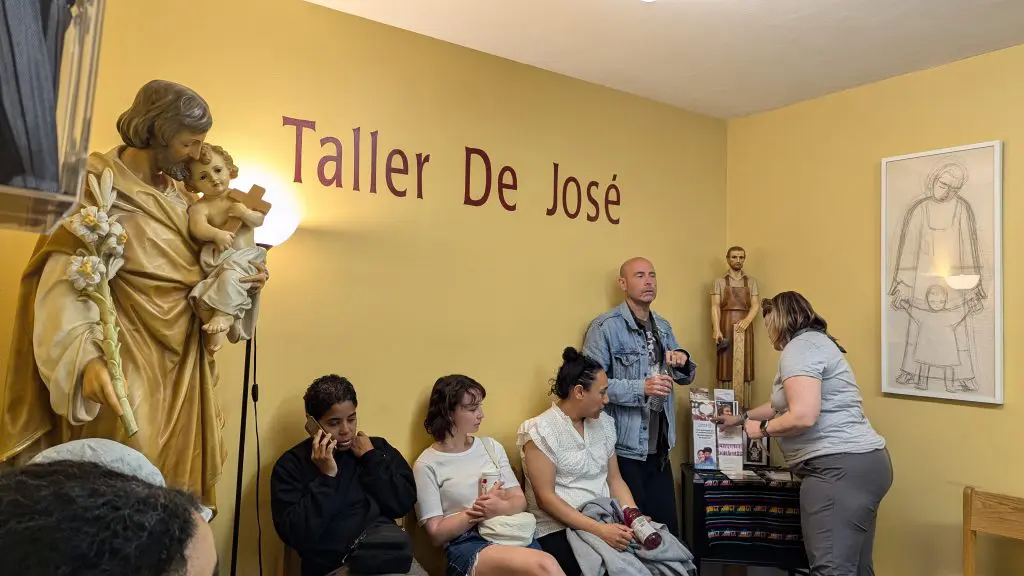
The final full day highlighted immigration reform, beginning with a prayer vigil outside the Immigration and Customs Enforcement (ICE) Processing Center, which is commonly the final stop for immigrants facing deportation. Started in 2002, the vigils have been held weekly to show solidarity and efforts working toward a more compassionate and comprehensive immigration reform. The day continued at Taller de José, an organization connecting people experiencing injustices to services through an assigned companion to personally guide them and address their needs.
Commenting on her time at Taller de José, Avia-Amuna said that it “gave me so much hope that practical help was sought and given. This kind of action personally gives me more motivation to continue pushing through.”
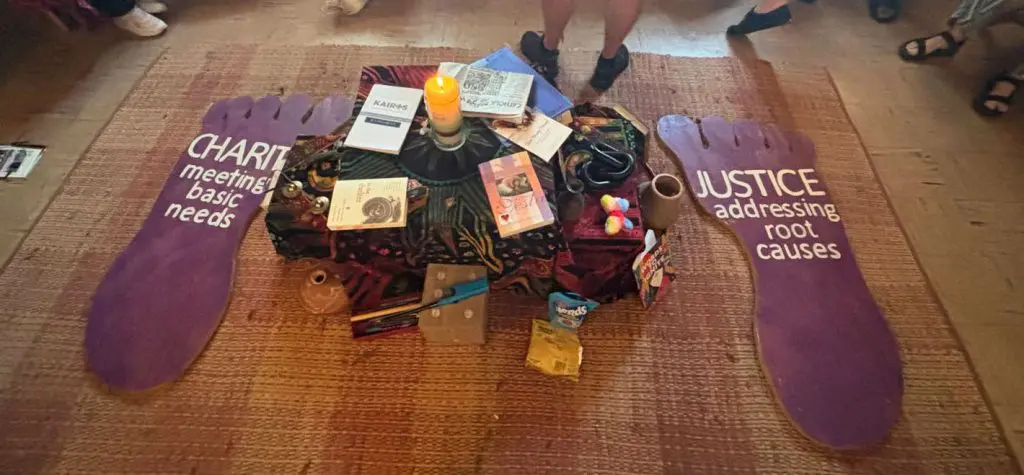
Back at the Darst Center, the group considered their week and next steps in an exercise called “the two feet of love in action.” One foot represents charity in meeting basic needs and the other justice in addressing root causes — both are needed in tandem to move forward.
The Darst Center’s current and former executive director, Keith Donovan and Mindy Rueden respectively, co-facilitated the weeklong program. Rueden reflected: “We are all called to show up consistently and with love to bring ourselves into the beauty and messiness of the work and be willing to explore, consider and reconsider, to wrestle with the truth, and do so together with our young people. To model not what it’s like to have all the answers but a commitment to searching for them.”
Avia-Amuna said she found great value in “connecting with educators who willingly shared their strategies for engaging young people in embracing their faith and reconciling it with the many injustices in the world. … Personally, I feel blessed with lifelong friends who have given me hope and strength to continue advocating for those on the peripheries.”
In departing, the LSJI group shared a commitment to one another and to uplifting Lasallian core principles in practice — recognizing the living presence of God within everyone, acting with respect and dignity for all people, cultivating communities of inclusion, showing concern for the poor and promoting social justice.
LSJI is a formation program from Christian Brothers Conference, the office for the Lasallian Region of North America (RELAN). Learn more about LSJI.
Photos courtesy of Phil De Rita and Dave Genders.