By Matt J. Nowakowski, Ed.D.
The mornings at Mount La Salle began quietly. Before the conversations unfolded and before we were thinking and speaking of Lasallian spirituality, there was the air — sweet with jasmine and roses, heavy with the promise of an early spring. That sensory invitation mirrored what many of us had come seeking: a renewed discussion of Lasallian spirituality. From March 17–22, 2026, 11 Lasallian thought leaders and seven Spirituality Fellows from the Lasallian Region of North America gathered in Napa, California, not to define Lasallian spirituality in the abstract, but to recognize it again where it already lives — among us, between us, inspired by Scripture and within our shared experience.
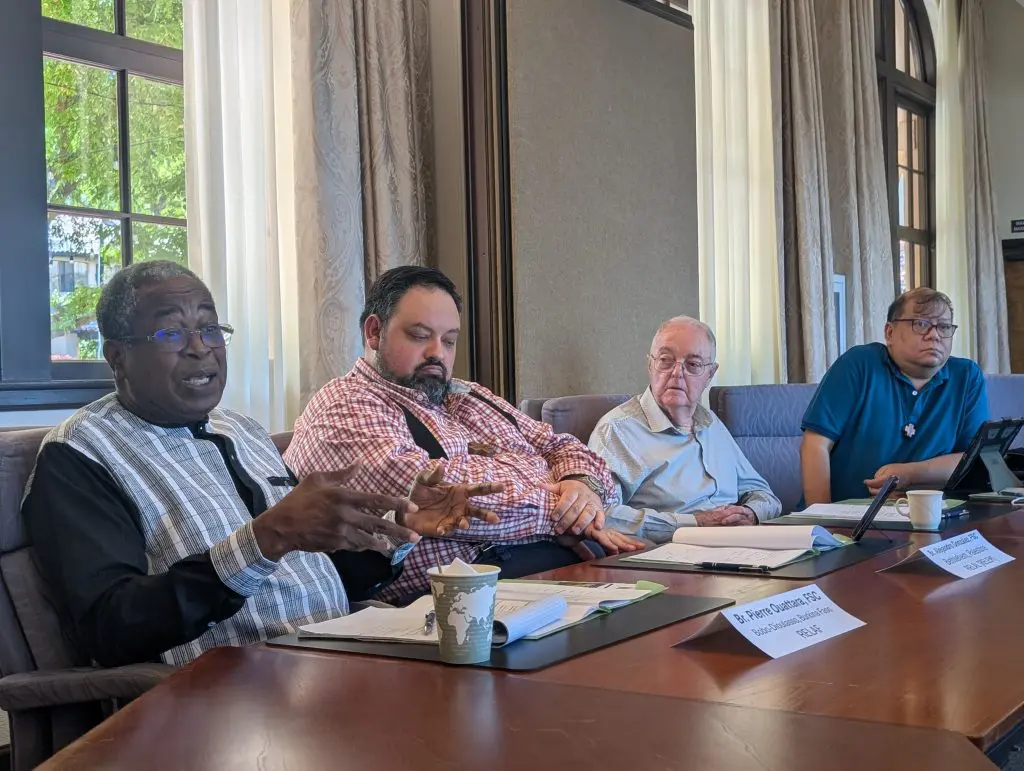
What emerged through community prayer, meals and discussion was a strikingly consistent realization: Lasallian spirituality is learned through accompaniment. Before it ever becomes theological language or institutional vocabulary, it is encountered as presence — someone walking alongside us when we are not yet sure where we are going. Many of us could trace our own Lasallian formation not to a text or program, but to a Brother, a mentor, a colleague who stayed close enough for us to notice how they listened, how they spoke, how they paid attention. We were, as one participant named it, “caught before we were taught.”
Across our varied roles — as educators, researchers, administrators and formation leaders — the ministry of presence surfaced as the unifying thread. Teaching, especially, was described as an intervention in the contemporary crisis of attention. To teach in the Lasallian tradition is to insist that students understand that their experiences matter, and that education must touch both intellect and interiority. Research and leadership were likewise named as vocational expressions of accompaniment, holding together fidelity to mission with attentiveness to complex and often paradoxical institutional and human realities.
The Emmaus story (Lk 24:13-35) returned again and again as a shared theological grammar. Jesus does not rush the disciples toward clarity; he walks with them in confusion, listens to their grief, and allows recognition to emerge in its own time. In this light, accompaniment is neither passive nor permissive. It is intentional, demanding sustained presence, patience and trust in God’s work already unfolding. As Lasallian educators, we are not initiators of mission so much as participants — joining what God is already doing in our students, our institutions and our world.
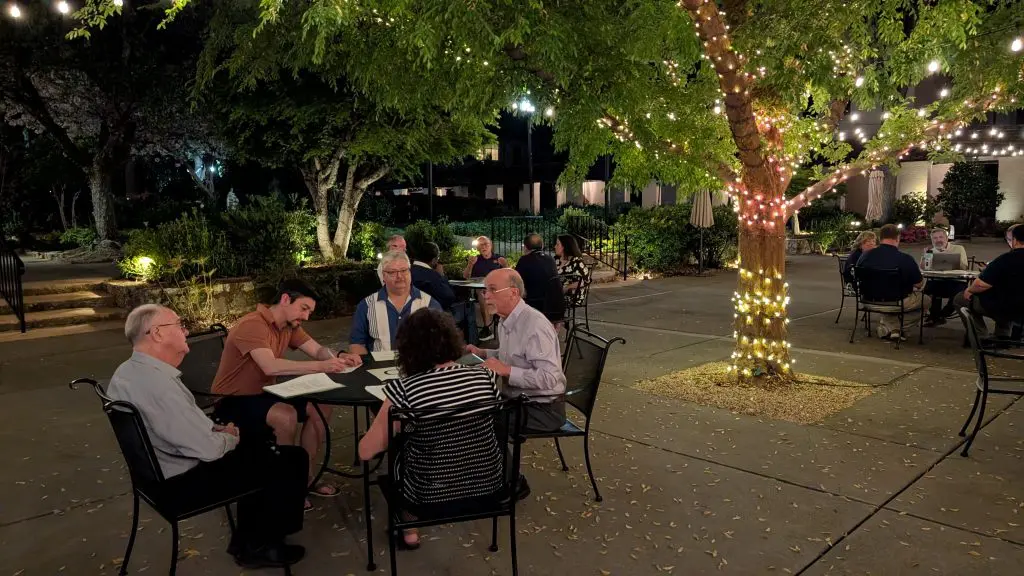
A particularly hopeful dimension of our gathering was the emphasis on intergenerational accompaniment. Stories surfaced of Brothers intentionally transferring leadership to younger educators and Partners, not out of necessity but out of confidence in the future of the charism. At the core of our educational mission, the importance of holistic development and full engagement of youth was highlighted. This reframing challenges us to ask how Lasallian spirituality can shape professional life beyond education — in business, engineering, politics and public service — forming graduates who do not merely succeed within existing systems but who work to transform them.
Equally important was the distinction drawn between accompaniment and indoctrination. In increasingly pluralistic and secular contexts, Lasallian spirituality must be offered as invitation, never imposition. Participants spoke candidly about resistance rooted in fear — fear of religious language, of coercion, of dependence. The image that resonated most strongly was that of the educator as icon rather than idol: one who does not draw attention to self, but who points beyond themselves toward transcendence. True formation, we acknowledged, requires interior conversion — freedom from ego, control and self-interest — because the liberation of others begins with our own.
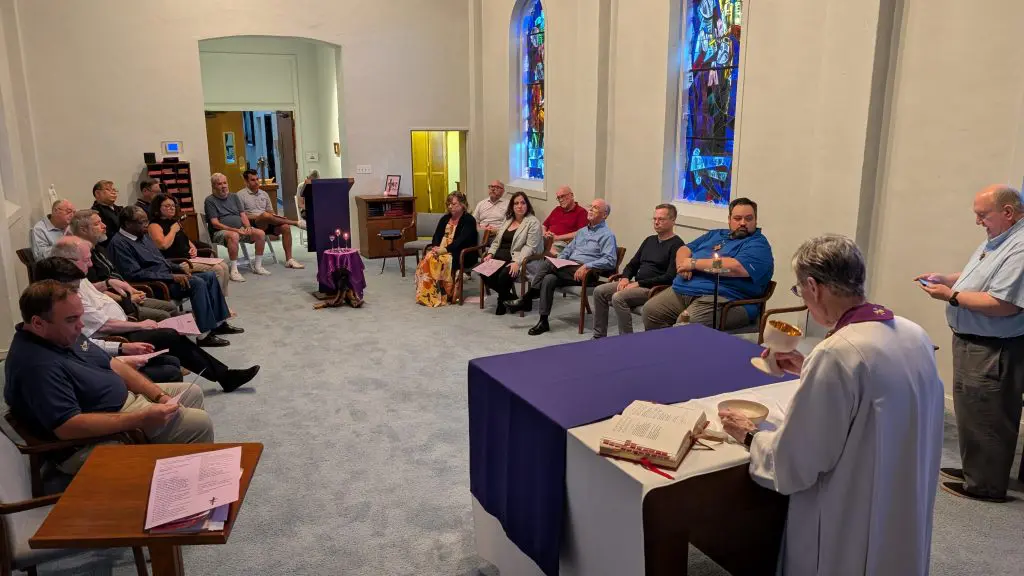
Throughout the week, spirituality and professional practice were never separated. God’s presence was named in classrooms, committee meetings, ethical dilemmas, and moments of institutional fatigue. Listening — deep, sustained listening to God, to students, and to one another — was named as a defining spiritual discipline. Obedience, in this sense, was understood not as compliance but as perseverance in attentiveness. To listen is an act of charity.
Ultimately, the effectiveness of Lasallian education was not measured by institutional longevity alone, but by its capacity to accompany people across the arc of their lives. Schools, we agreed, are communities of formation — spaces where reverence for the human person, compassion, discernment and responsibility can be cultivated. In a world marked by fragmentation and distraction, accompaniment stands as a quietly radical expression of Lasallian spirituality, holding together transcendence and fraternity, tradition and adaptive growth. At Mount La Salle, surrounded by emerging spring, we were reminded that this mission remains alive precisely because it is shared — and because it continues to walk with others, one step at a time.
Matt J. Nowakowski, Ed.D. is managing editor of AXIS: Journal of Lasallian Higher Education.
Invited thought leaders included:
Brother John Cantwell, FSC
Edmund Chia
Brother Alejandro González, FSC
Brother Ricardo Laguda, FSC
Brother William Mann, FSC
Margaret McGuinness
Brother Pierre Outtara, FSC
Alfred Pang
Brother Robert Schieler, FSC
Brother Michael Valenzuela, FSC
Brother George Van Grieken, FSC
The Lasallian Spirituality Fellows are inaugural members of an 18-month program that engages with Lasallian spirituality and theological texts, De La Salle’s writings, their call to educate and accompany the young, and more. Fellows include:
Tony Behan
Brother Dennis Cronin, FSC
Tom Devlin
Holly Hoey Germann
Brother Nick Gonzalez, FSC
Susan Major
Chris Winiarski
Staff:
Sarah Laitinen
Matt Nowakowski
Tom Southard