For the 2025 Year of Lasallian Spirituality, Christian Brothers Conference is offering an Encountering Lasallian Spirituality Retreat this Nov. 3-6 at Bethany Center in Lutz, Florida. Registration will open in mid-March. In the reflection below, Dr. Jaclyn Doherty describes her experience at the first spirituality retreat offered by the conference in early 2024.
By Dr. Jacyln Doherty
In February 2024, I submitted my dissertation to a group of professors for evaluation. After five tireless years of doctoral work — juggling research, coursework, labs, teaching, publishing, internships, fellowships and service — I had completed the most demanding requirement of my doctorate in social psychology. Four days later, I traveled to Florida for the Encountering Lasallian Spirituality Workshop and Retreat. I looked forward to a contemplative and restful week, which felt impossibly well-timed now that the dissertation was in my committee’s hands.
At the retreat, we reflected in community through conversation, which felt very comfortable among Lasallians, who seem especially inclined toward group processing, discussion and accompaniment. However, we also reflected individually, often in silence. This felt less familiar in a Lasallian context. We each wandered around the retreat center alone, and I was unsure how to acknowledge others in passing — should I make eye contact, should I offer a smile, should I ignore them? In time, this relative solitude felt more natural and even more valuable than I expected.
It was during my solitary walks around the lake that I started to feel the weight of my stress. I acknowledged that I was experiencing burnout. I came to recognize how I had distanced myself from my family, friends and faith while in school. How I had misplaced my sense of self. Undeniably, though, I felt the tension in my body and spirit begin to release through the week. A tension that I hadn’t (and perhaps still haven’t) fully realized. It was unclear whether this tension was symptomatic of my graduate studies or if it was inherent to my personality. I’d spent my whole life working toward my achievements, usually academic and professional ones, and my identity was intertwined with this striving and ultimate exhaustion.
I’ve encountered similar types of ambition in Lasallian communities. Through research conducted in my current position, I’ve seen Lasallian students’ academic and extracurricular aspirations, as well as the negative link between educational pressures and thriving. I’ve seen Lasallian professionals — educators, social workers, administrators, researchers, publishers and more — doing everything they can to care for young people but not always caring for themselves. I’ve witnessed a drive to succeed and a zeal to support young people, which I deeply admire. But I’ve also seen that when these efforts aren’t balanced with self-care, they can lead to burnout. This is a state in which a person can no longer serve effectively.
I knew that I wanted to use my transition out of graduate school as an opportunity to reevaluate: Who am I without intense stress and burnout? How do I maintain this state? What will I do with my newfound energy and time? What are my priorities? How can I rebalance my work and life to be more fulfilling? How can I take advantage of my fresh start?
I was fortunate to begin this exploration through the lens of Lasallian spirituality. I had dedicated time to reflect on my life and vocation, both individually and in community. I learned about the different seasons of life and their cyclical nature. I learned about (and experienced) the power of personal reflection while walking outside. I learned about the practice and application of spirituality across life domains. And I continue to consider these lessons as I navigate my ever-evolving sense of purpose and balance.
It seems easy to forget that the Lasallian charism’s fervor and action are accompanied by reflection and rest. To forget that the benefits of Lasallian community are enhanced by interiority, an attention to the inner self. To forget that the “holistic vision of the human person,” (from Lasallian Spirituality Today) which helps us better serve our communities, is not only a vision of our young people, but also of ourselves.
Of course, we don’t need a major life transition to employ the principles of Lasallian spirituality. But transitions, which we experience at different scales throughout our lives and ministries, can serve as pivotal moments. We begin different positions, wrap up semesters, develop initiatives, complete projects, and meet new young people. These changes provide opportunities to reevaluate and rebalance, and for me, Lasallian spirituality has been an invaluable framework in this journey.
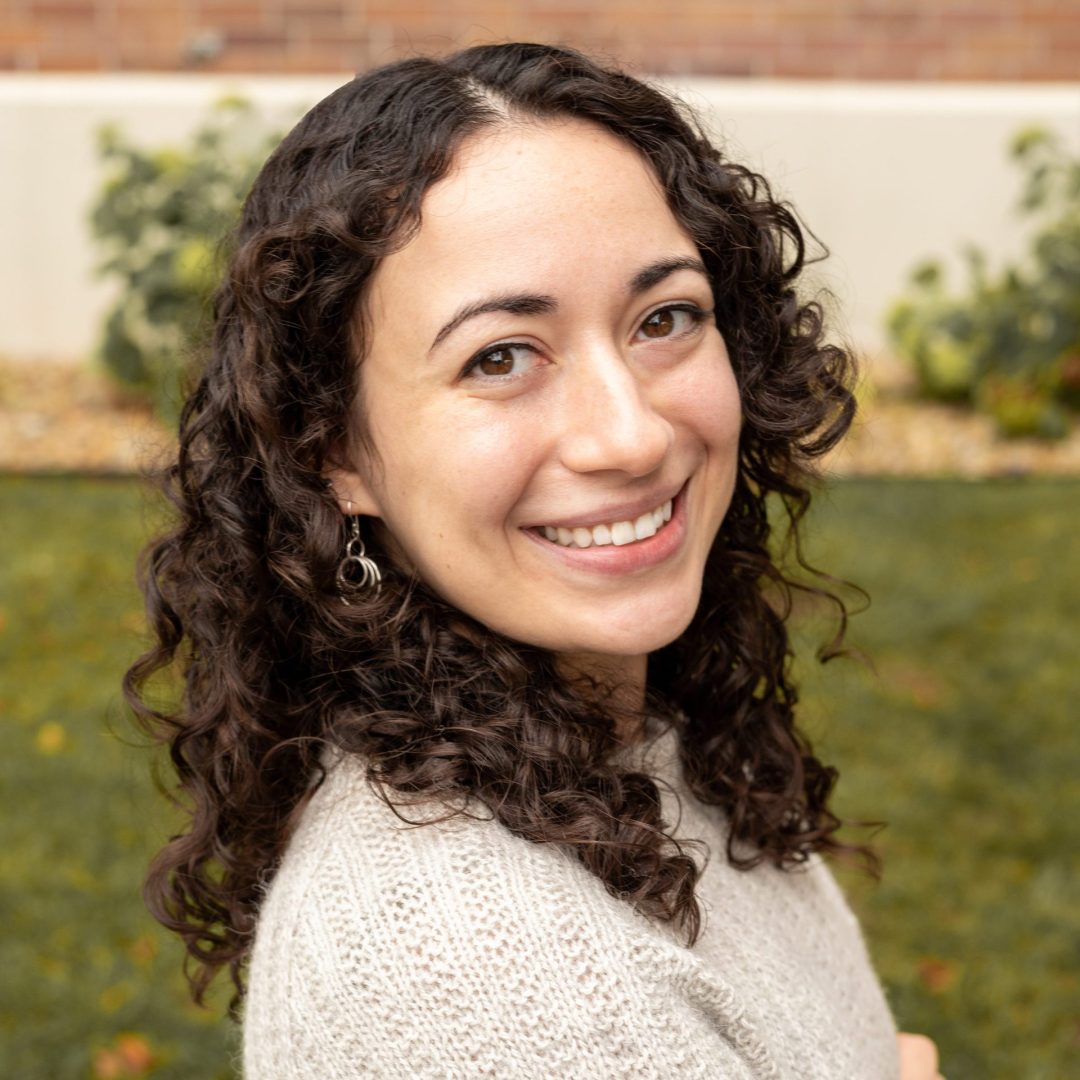
Jaclyn Doherty, Ph.D., is a research associate at Springtide Research Institute, a non-profit organization that uses social scientific methods to better understand young people, ages 13 to 25. At Springtide, Dr. Doherty leads research on the belonging and thriving of Lasallian high school students across RELAN. She earned her doctorate in social psychology from the City University of New York Graduate Center.