During October, Cohort V of the Brother John Johnston Institute of Contemporary Lasallian Practice (JJI) met by District to consider the topics of educational service of the poor and the promotion of justice.
Lois Harr, former adjunct instructor of religious studies and assistant vice president at Manhattan University in the Bronx, New York, served as a presenter for all three District sessions. Dr. Michael Daniels also presented at the District of San Francisco New Orleans’ session, Oct. 9-11. Brother Robert Schieler, FSC, former Superior General of the Institute of the Brothers of the Christian Schools, served as presenter at the District of Eastern North America’s session, Oct. 16-18. Alan Weyland, director of Catholic School Consulting and Mission Advancement at Christian Brothers Services in Romeoville, Illinois, presented during the Midwest session, Oct. 23-25.
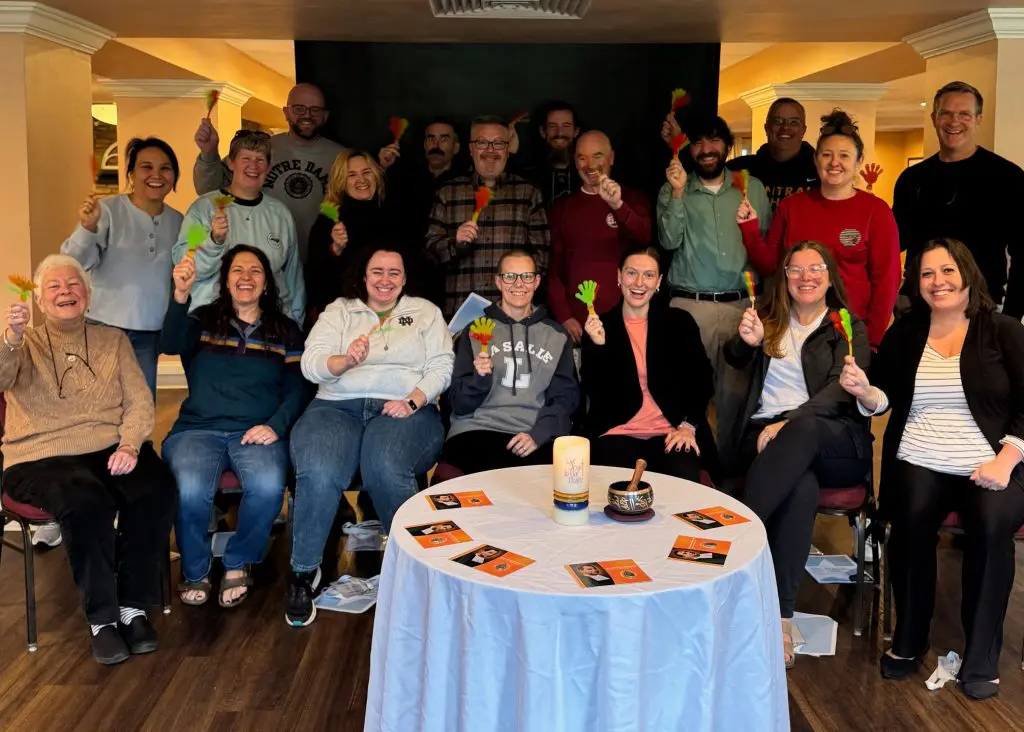
The aim of the fall session was to explain the historical way Saint John Baptist de La Salle addressed educational service to the poor and discuss how the participants’ ministries provide educational service to the poor today. The session also sought to provide a context for Catholic social teaching in the modern world and in the Lasallian vocation, as well as apply that teaching to contemporary realities.
Amanda Webster, campus minister at Christian Brothers Academy in Syracuse, New York, reflected on her takeaways from the fall session: “See. Judge. Act. Three simple words and yet three words that simplify the church’s doctrine of Catholic social teaching.”
Webster spoke about presenter Lois Harr’s breakdown of Catholic social teaching into four permanent principles: human dignity, the common good, subsidiarity and solidarity. “Harr implored the room of educators to imitate God, be the source of joy, and (said) ‘ultimately, to give your life to Jesus … is the fulfillment of your ministry. The question is: Will you allow the poor to convert you?’”
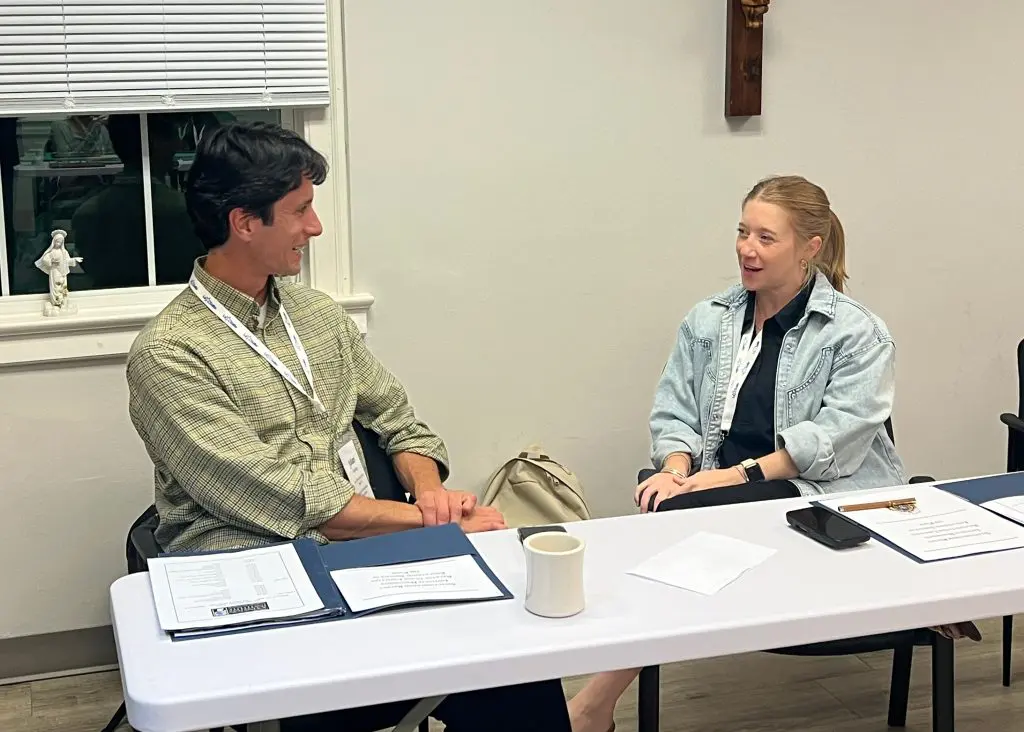
“As Lasallians, we are called to see, judge and act for the last, the lost and the least, but more importantly, will we allow those at the margins to radically change us?” Webster said.
Participant Angie Maffeo Rodriguez, Ed.D. , director of International Student and Global Scholar Services at Lewis University in Romeoville, Illinois, said, “One of the things I love most about the Lasallian mission is its dedication to finding solutions to contemporary social issues facing education, especially for those who are the most ‘poor’ or marginalized. In addition to the economically poor, immigrant populations in the U.S. are being directly affected by current government policies, and resources are becoming scarcer. In Chicago and other cities, many children and families fear leaving their houses to go to school, families are hungry, and educational opportunities are suffering. I feel that immigrant communities are the most marginalized group at this time, and we are being called to serve them as Jesus would.
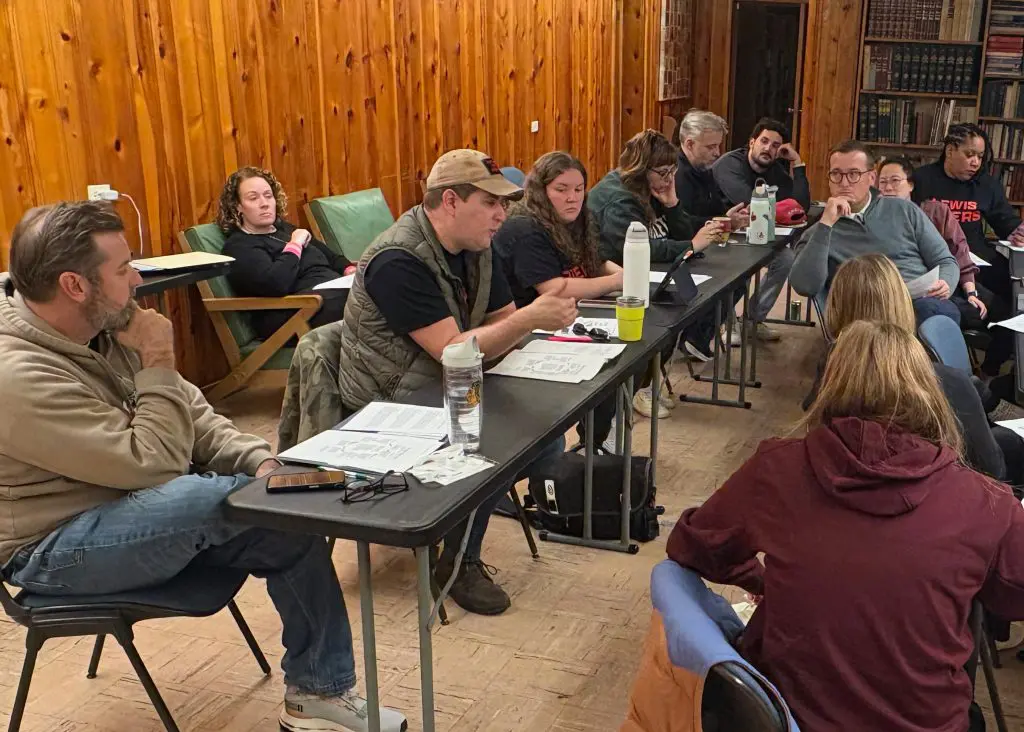
“The Lasallian vision of creative fidelity, always adapting to the needs of the time, allows me to confidently apply the Lasallian values of service and justice to the poor to this current context …, knowing that I am backed by Catholic social teaching, the Lasallian educational mission, and the core values of De La Salle,” Rodriguez said.
As the Cohort V participants look to graduate from the program in the spring, each participant – individually or with colleagues at their ministry – will be working on completing their Capstone Projects. During the final session, participants will present their project or reflection paper.
Ernest Siy, principal at La Salle College Preparatory in Pasadena, California, said his capstone will take “a deeper dive into the Lasallian and Catholic tradition of ‘together and by association’ and how collaboration and shared mission among faculty members can strengthen our efforts to promote justice and provide transformative educational experiences, especially for those most in need.”

Frank McFadden, MS, director at Catholic Community Services (CCS) in Philadelphia, Pennsylvania, said, “My colleague Afolarin (Fola) Ogunyinka and I have centered our JJI capstone project on a pressing issue: preventing re-entry into the child welfare system for adopted children. Each year, CCS sees a dozen or more adopted children – once part of Philadelphia County’s child welfare system – return to care. Our goal is to help adoptive families stay intact by identifying and addressing the barriers they face.
“This is a three-year initiative, extending beyond our JJI experience. … What I most look forward to sharing with the JJI community is the story of these families – their voices, their resilience, and the barriers they’ve helped us uncover. I’m eager to present the concrete steps we’ve taken in response, and the early signs of progress. If successful, our work will help ensure that adopted children – once part of the child welfare system – can grow up in the loving, permanent homes that chose them.”
The cohort will meet by District for their final session in March 2026.