A new cohort of 56 Lasallians met at Lewis University for the first session of the Brother John Johnston Institute of Contemporary Lasallian Practice (JJI). Focused on the founding story and vision, this Regional gathering kicked off the two-year formation program with a week in Romeoville, Illinois.
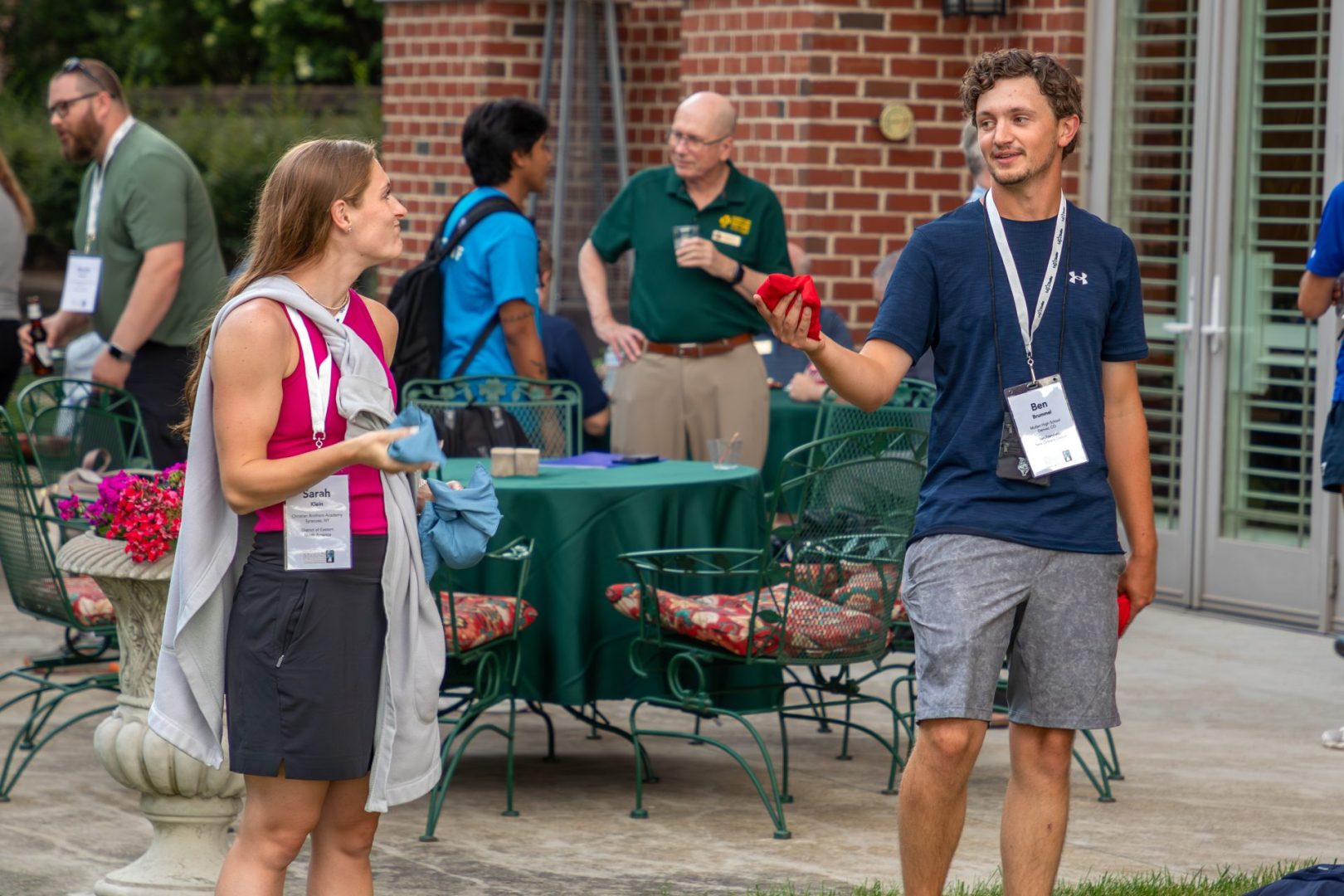
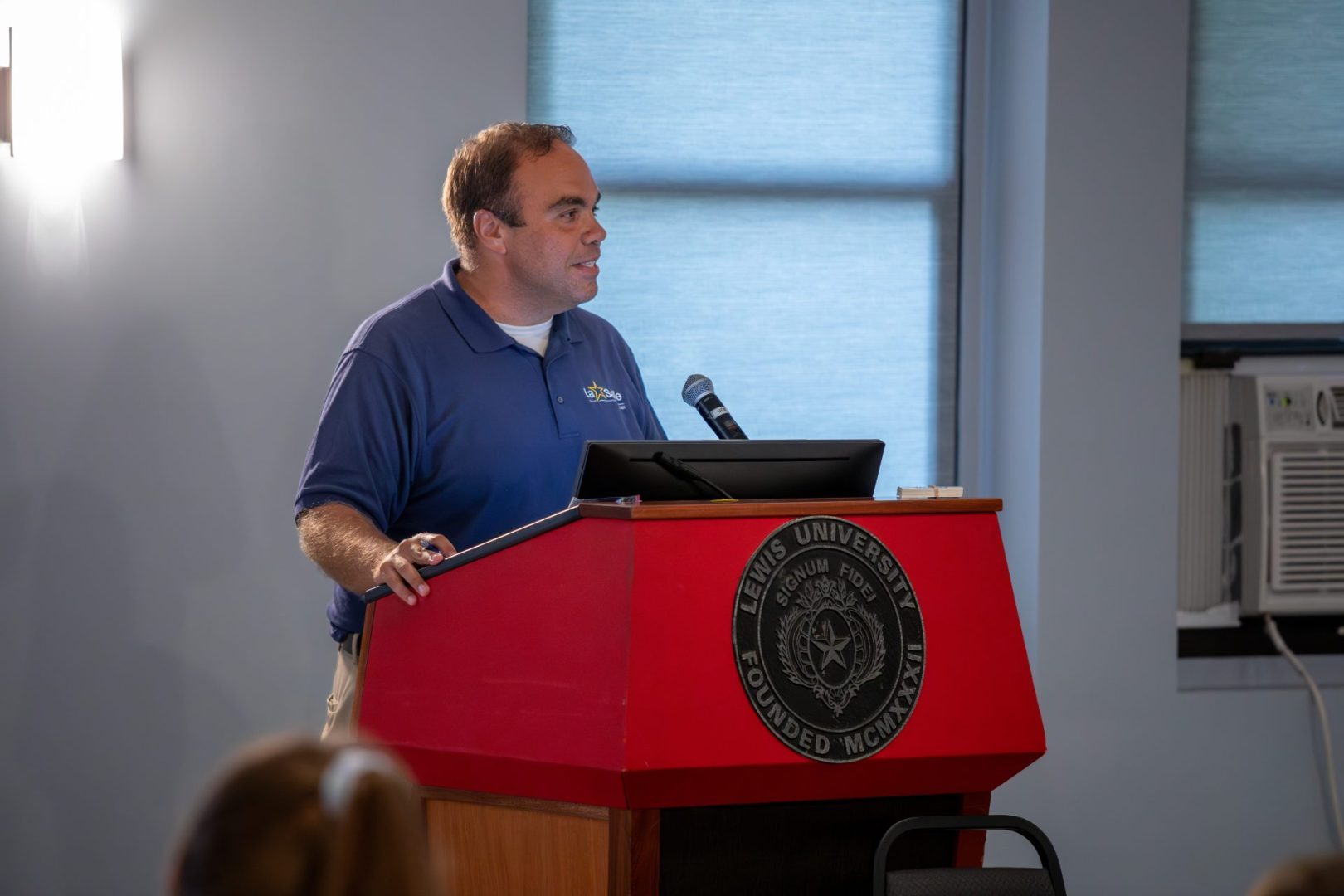


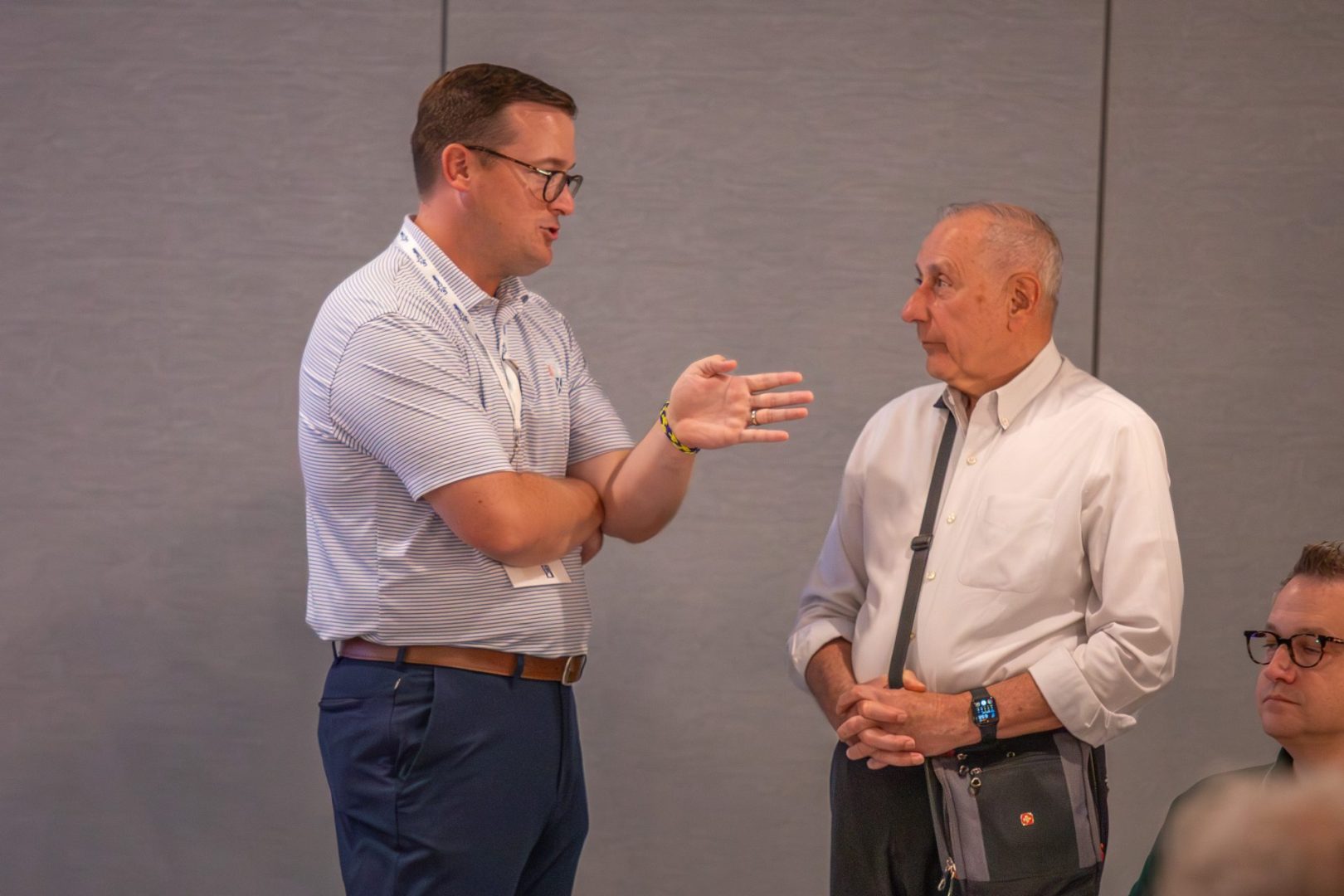
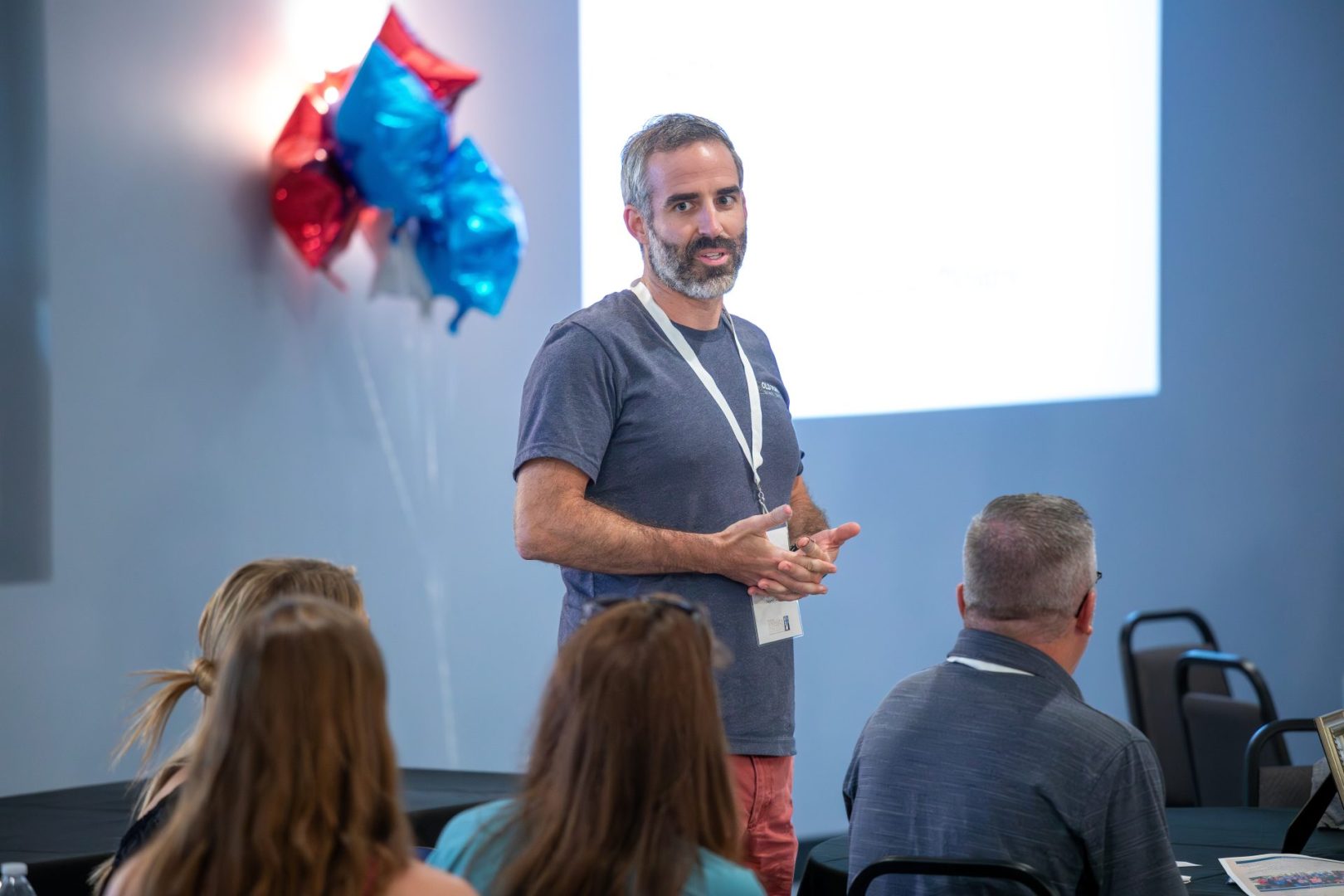




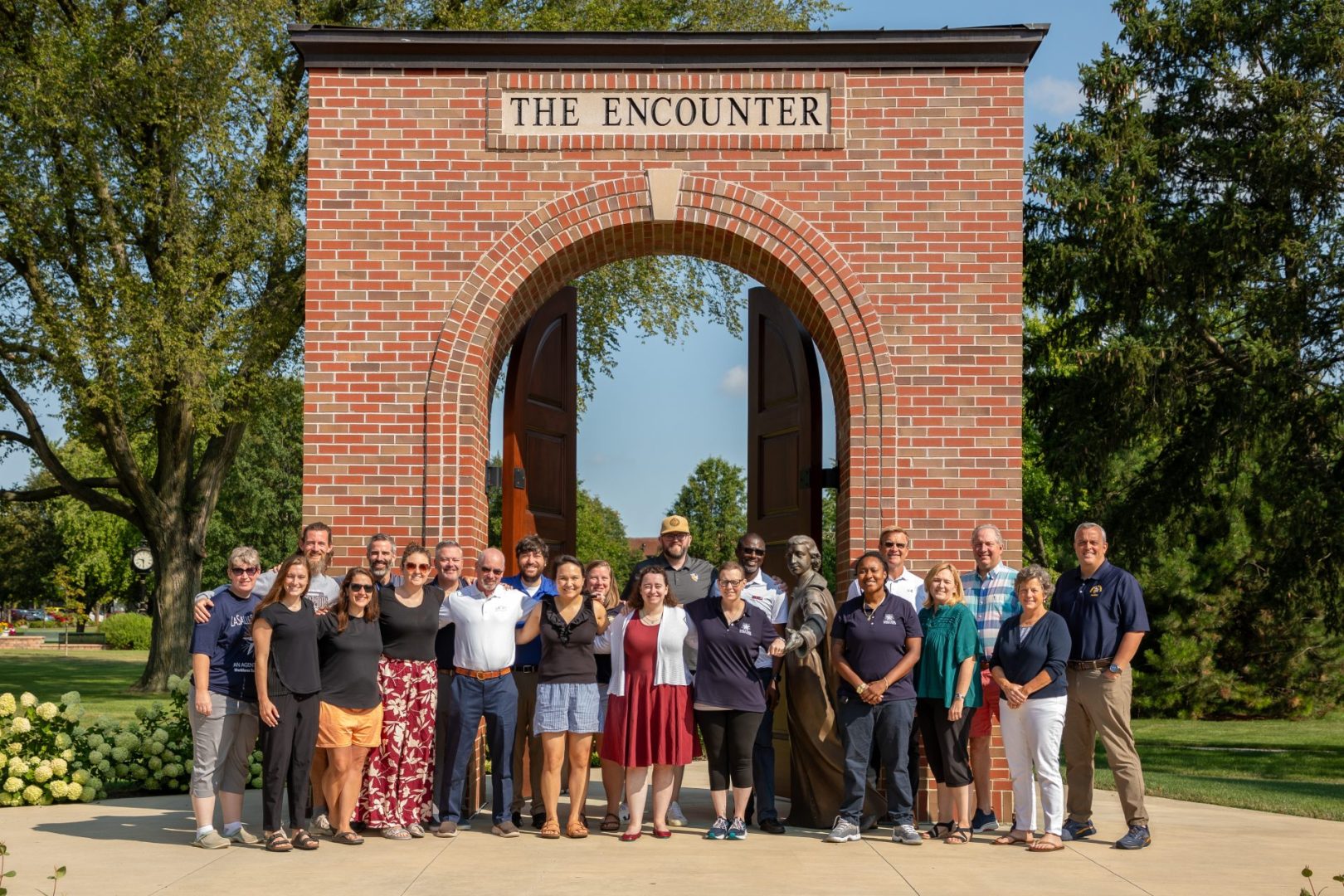
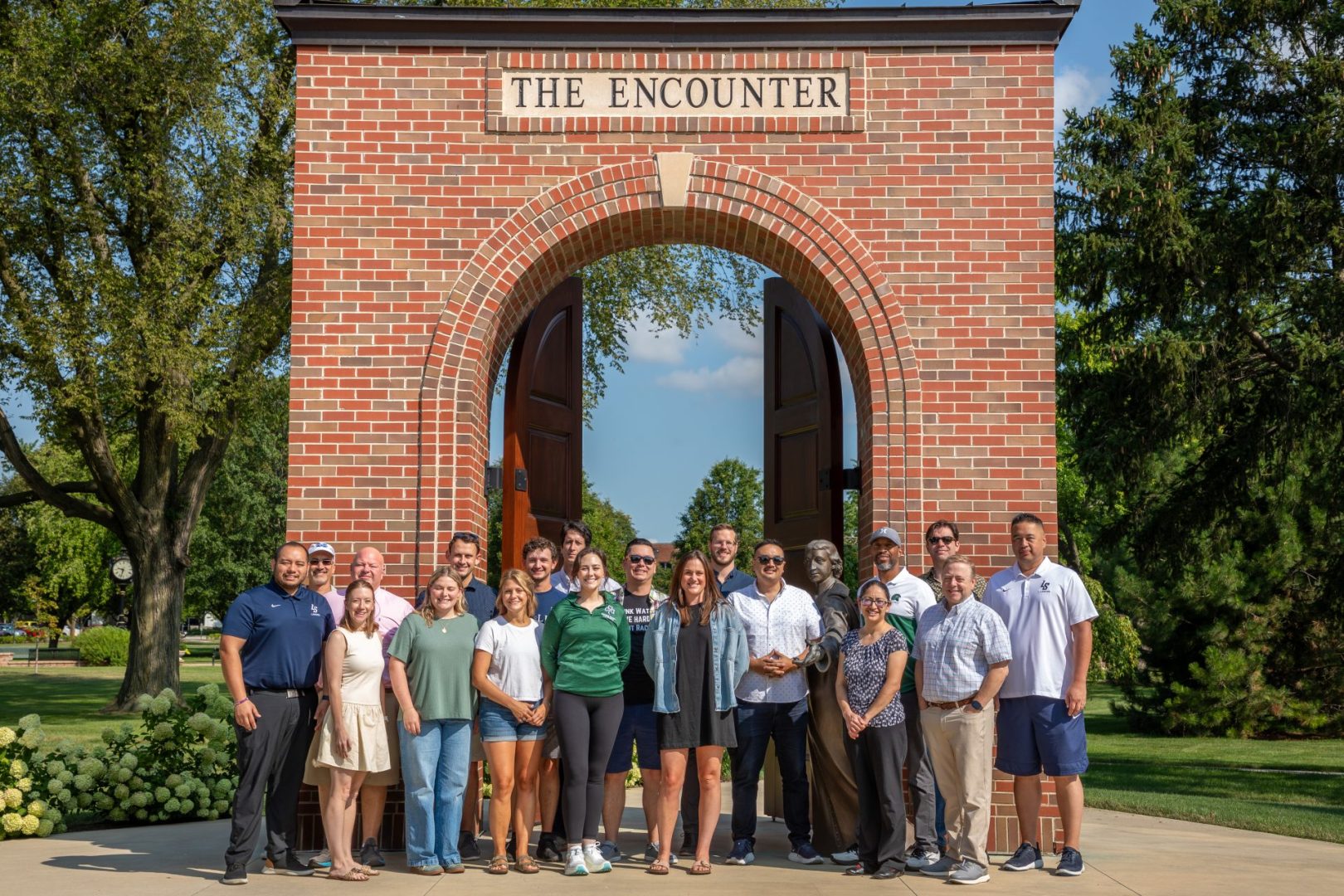


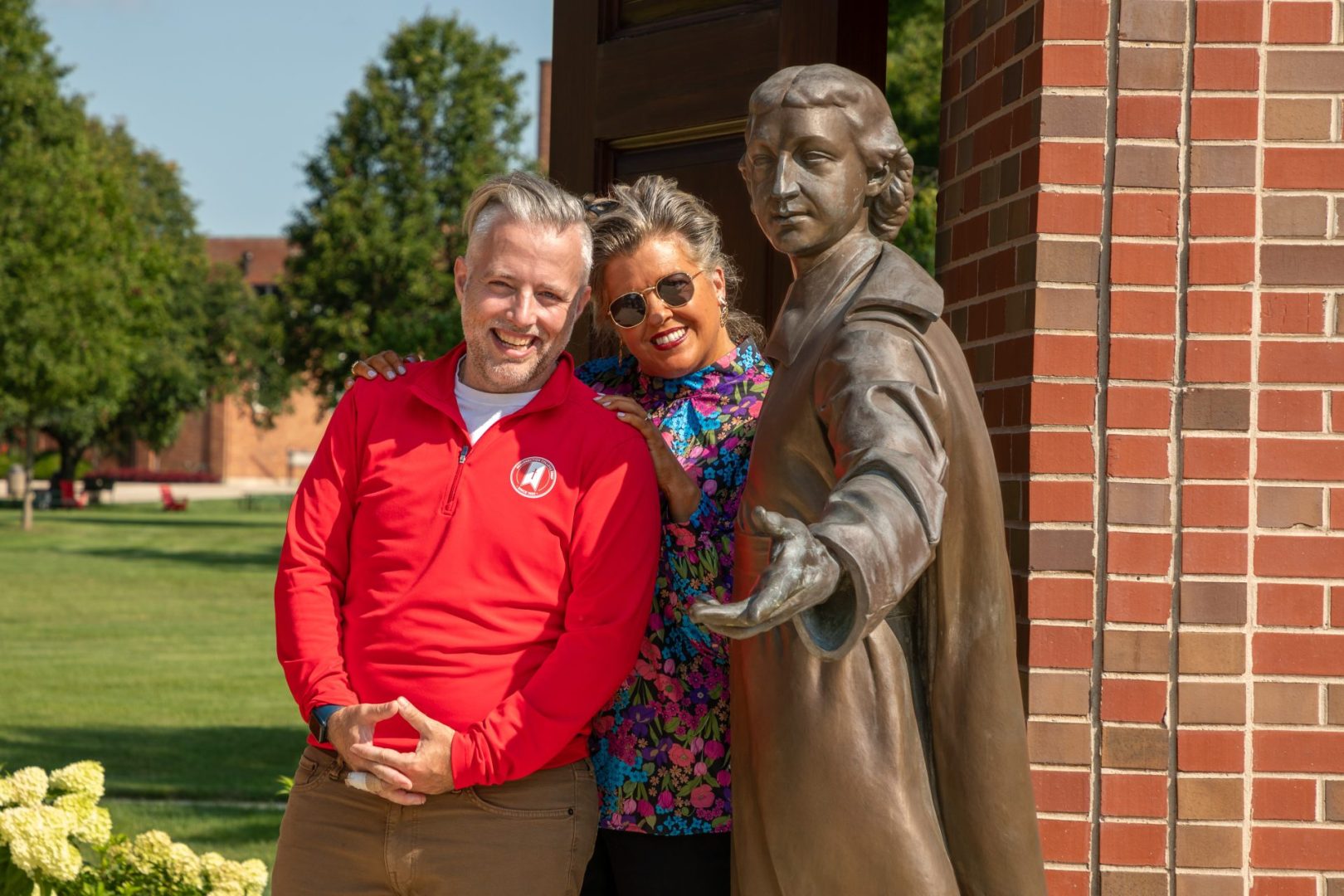


Community was at the heart of the program from the start as participants began with a social at La Salle House, the Midwest Brothers community at Lewis University. The group received a welcome from both former Lewis University president Brother James Gaffney, FSC, and current president Dr. David J. Livingston.
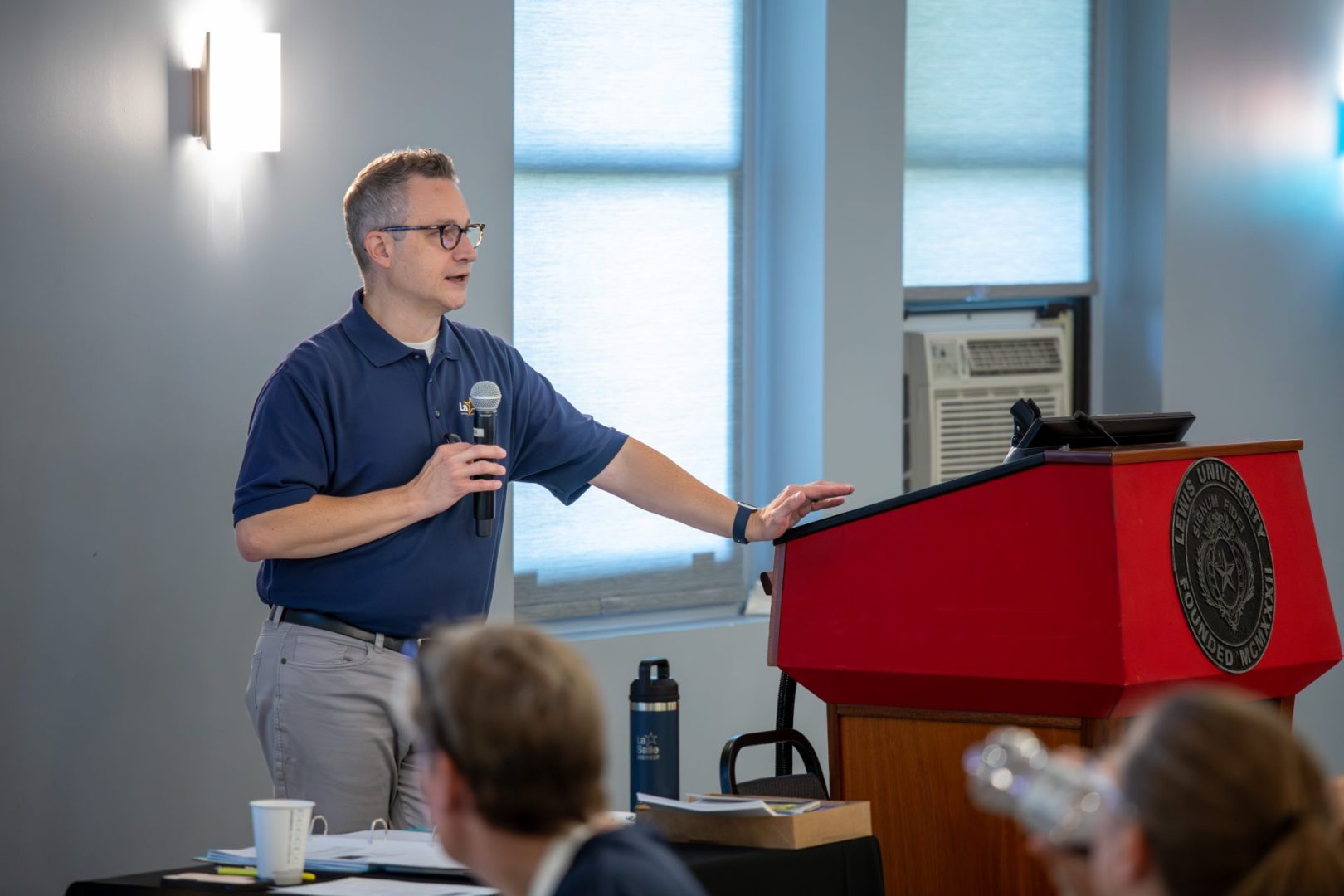
Tom Southard, executive director of Christian Brothers Conference, the office for the Lasallian Region of North America (RELAN), later addressed participants and set the tone for this time of learning, deepening and sharing. Presenter Dr. Jan Mines, AFSC, dean emeritus of the College of Education at Lewis University, then led the group through Institute and Regional structures, and had participants reflect on what brought them to JJI.
Reflecting on his experience at JJI, participant William O’Brien, director of accounting at Lewis University, said, “It was amazing to meet all the other Lasallians and to understand how many different aspects of life everyone touches.” He continued, “Getting to meet them and build these relationships leaves me looking forward to meeting again and continuing this journey together.”
Dr. Will Dunford, director of faculty development at De La Salle High School in Concord, California, echoed that connecting with other Lasallians allowed him to “gain a better understanding and appreciation for the wide variety of ministries meeting the needs of their distinct communities through slightly different approaches to the Lasallian mission.”
JJI sessions focused on Lasallian foundations — delving into the groundwork laid hundreds of years ago, exploring what those fundamentals look like today and envisioning how the mission can be lived out in the future.
Starting with a key moment in Lasallian history, presenter Dr. Kurt Schackmuth, vice president for student life and chief mission officer at Lewis University, spoke of Saint John Baptiste de La Salle’s Encounter moment and its context. Dr. Mary Catherine Fox, AFSC, professor emerita at Saint Mary’s University in Winona, Minnesota, explored the women in the time and life of De La Salle and their influence on the founding Lasallian vision.
Commenting on the sessions, Krystina Henley, director of elementary instruction at Catalyst Maria K-12 charter school in Chicago, Illinois, said, “I’ve gained a better understanding of our rituals and practices and their significance. This first formation experience with JJI has made me feel more connected and passionate about our mission.”
Dr. Dunford noted that he felt energized to “dive more deeply into the story and vision and contextualize it within our modern reality.”
During the program, participants met by District twice with their designated accompanier — Brother Michael Phipps, FSC, led the Midwest District in addition to his role as onsite JJI director, Justin Martineau led the District of Eastern North America and Dr. Andrew Kuffner led the District of San Francisco New Orleans. The District meetings gave each group a chance to connect more deeply with those nearer to their ministries.
Participants were also brought to the present-day Lasallian mission, as all three presenters dove into topics including: the modern commitment to social justice and its context, the Lasallian vocation, and the role of women and Partners today. “It often feels as though we are such a small community working in our individual programs,” said Melissa R. Itskov, IEP coordinator of LaSalle School in Albany, New York. “I was surprised to see so many people from all over the United States doing this work similarly but different and representing their programs. The size of the Lasallian community is so much larger than I realized.”
Henley said, “This gathering has profoundly renewed my commitment to my purpose. It has deepened my understanding of my calling and inspired me with new ideas to bring back to my ministry, particularly on how to intentionally strengthen our Lasallian identity in a non-religious school setting.”
Before the gathering’s close, Dr. Mines led participants through a reflection on their takeaways and insights from the week and had the group consider who they might speak with about their experience upon their return to their ministries.
“I am here and doing what I am doing for a reason,” affirmed Istkov. She realized that “there is so much more that can be done” and felt empowered “to continue to do the work I am doing as well as improve on the work being done.”
In looking ahead to the next two years of formation, Dr. Dunford said, “I hope to have the opportunity to engage in difficult conversations that allow for risk taking and creativity in well-structured and meaningful workshop sessions that will inform and influence current and future Lasallian practice.”
The cohort will gather by District in October to discuss Lasallian pedagogy and share best practices.
The Brother John Johnston Institute of Contemporary Lasallian Practice is a formation program by Christian Brothers Conference, the Regional office for the Lasallian Region of North America (RELAN). Learn more about the two-year program.
Photos courtesy of Lewis University, Andrew Kuffner and Justin Martineau